You crave the beach in a way you cannot explain.
You feel different the moment you step under a big tree. You sleep deeper at the holiday house than in your own bedroom. You take photos of leaves and you do not know why.
This is not a hobby. This is your body.
You belong in the living world.
And every cell inside you knows it.
Biophilic design is not decoration
Biophilic design is the practice of bringing the patterns of the natural world into the spaces we live and work in. Wood grain. Water sounds. Daylight. Plants. Stone. Curves instead of sharp edges. Air that moves. A view of something growing.
It is not about a feature wall of moss for the photo. It is about giving the human body what it spent two hundred thousand years recognising as "home."
What the science says
The word biophilia was made famous by Harvard biologist Edward O. Wilson in his 1984 book of the same name. His argument was simple. Humans have an inborn need for connection to other living systems. When we cut that connection, our bodies pay.
The numbers are striking.
In 1984, environmental psychologist Roger Ulrich published a study in Science showing that hospital patients with a window view of trees recovered almost a full day faster from surgery and needed less pain medication than patients in identical rooms with a view of a brick wall.
In 2015, a study by Browning, Ryan, and Clancy of Terrapin Bright Green reviewed more than 500 papers and found that workplaces with biophilic features measured up to 15% gains in wellbeing, 6% gains in productivity, and significant drops in absenteeism.
In Japan, decades of research on shinrin-yoku (forest bathing), led by Dr Qing Li at Nippon Medical School, have shown that two hours under trees lowers cortisol, slows heart rate, and raises natural killer cell activity, the immune cells that fight illness, for up to seven days.
You do not need a forest to access this. The body responds to a houseplant on a desk in the same direction, just at a smaller dose.
The body is always voting on the room it is in. Biophilic design is how you stack the vote in its favour.
Six biophilic shifts you can make this week
None of these require renovation. All of them speak directly to your nervous system.
1. One real plant in the room you sit in most
Not silk. Not plastic. Real. Your eyes know the difference and so does your breath. A pothos, a peace lily, or a snake plant survives almost anything and quietly cleans your air at the same time.
2. A view of something growing
If you have a window onto a tree, sit so you can see it. If you do not, place a plant on the sill so the eye lands on green when it rests. The brain reads "outdoor view" even from a small living edge.
3. Real materials, even in small doses
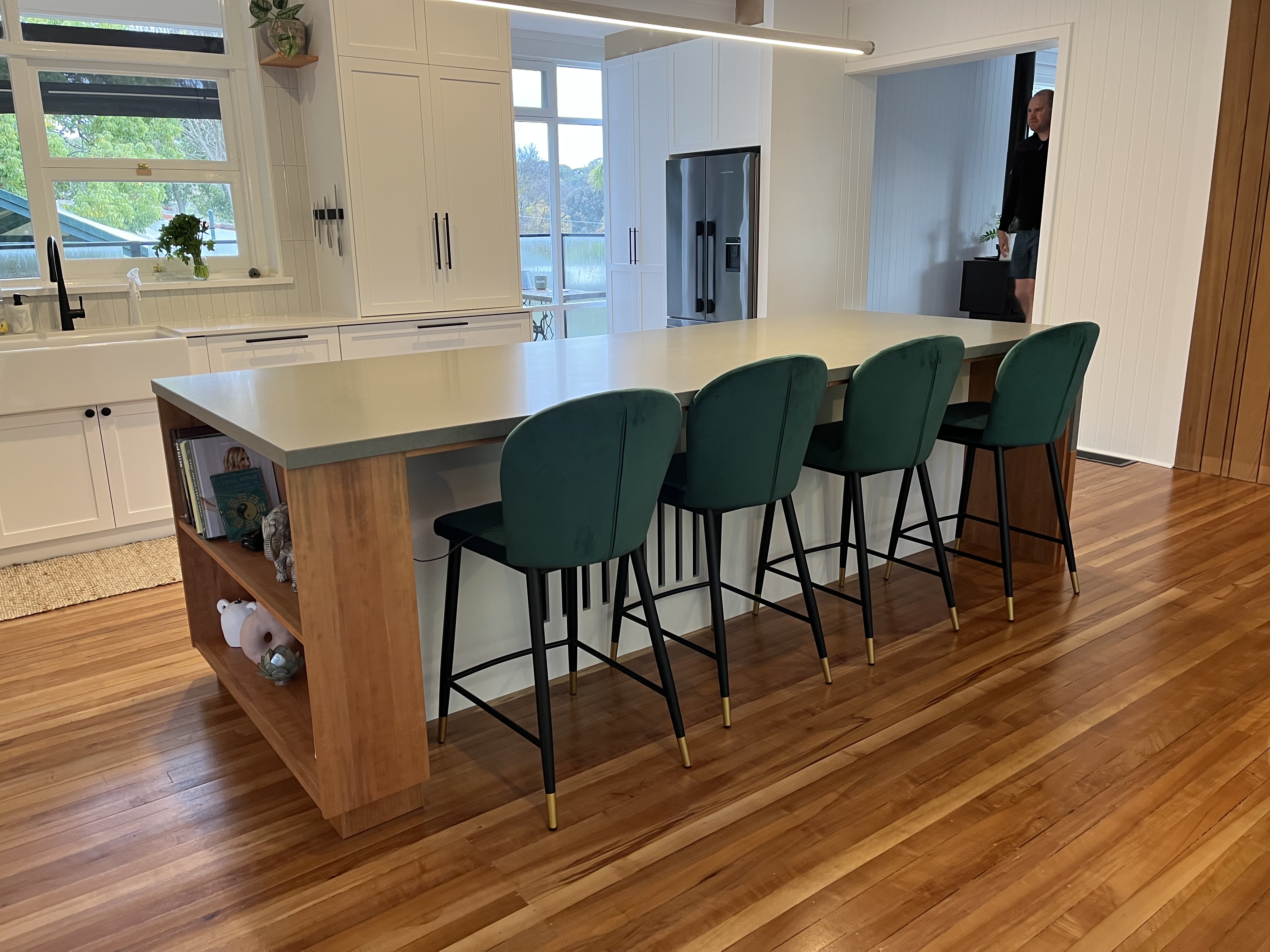
Trade one synthetic surface for a natural one. A wooden chopping board on the bench. A linen tablecloth. A wool throw on the couch. Cotton sheets instead of polyester. The body recognises wood, wool, linen, cotton, and stone as friends. It does not relax around plastic.
4. Daylight, on every face
Open the curtains in the morning before you do anything else. Step outside, even barefoot for one minute, before 9am. This single habit resets your circadian rhythm and lowers night-time anxiety more than most sleep apps.
5. A water sound, somewhere
The sound of moving water reduces stress almost as quickly as silence. A small tabletop fountain. The kitchen tap left on a thin trickle while you cook. A water-sounds playlist while you work.
6. Curves and softness
Sharp corners ask the eye to keep working. Soft edges, round mirrors, oval rugs, curved cushions, gentle arches in a doorway, let the eye rest. Notice how a softer shape changes a whole room.
A home should feel like a hug, not a hospital.
Biophilic design in a small apartment, a rental, a tight budget
You can do all six of the above for under two hundred dollars and no landlord permission. This is the gift of biophilic design. It does not require ownership or money. It requires intention.
One plant. One linen pillowcase. One open window in the morning. One walk past one tree before you sit down to work.
The body responds within days.
Why this matters for your children
Children who grow up in homes with daily contact with nature, real plants, daylight, natural materials, real wood, real fabric, real stone, regulate their nervous systems faster, sleep more deeply, and tolerate transitions with less distress. This is the foundation of every healing space I have ever designed for a child.
You are not adding "nice things" to your home. You are giving the small bodies inside it the language they were born to read.
Bring one piece of the living world into the room you are sitting in tonight. Just one. Then watch what happens to your shoulders by Friday.