 Speaking
The Silent Partner
The keynote on the performance variable your audience is already sitting inside while you talk to them about performance.
Speaking
The keynote on the performance variable your audience is already sitting inside while you talk to them about performance.
Every audience hears about performance while sitting inside the one variable nobody in the programme has mentioned.
This is not a keynote about interior design.
It is not a list of office hacks.
And it is not another instruction for people to manage themselves better.
The Silent Partner introduces audiences to the relationship between physical environment, human biology and performance, and gives them a lens for noticing it themselves.
Through stories, science, SPACE and live observation, I make an often overlooked variable visible.
I teach the audience to read the environment they are already sitting in.
Before anything is explained
Take ten seconds and notice one thing your environment is asking your body to process right now.
A pause, long enough to be uncomfortable
Is it asking you to ignore something, to remember something, or to tolerate something?
By the time I have explained anything, they have already read a space for themselves. That is the whole method, and they have just done it.
Once you can read an environment, you cannot stop reading it. They do it on the way back to their desks, and they are still doing it in the next building they walk into.
Space sends signals. Signals shape state. State shapes capacity. Capacity shapes performance.
Five steps, named in the hall so people can use them the same afternoon. The organisation often measures the last one while overlooking some of the conditions that came before it. The framework in full.
It finished, and the floor feels the same. Nobody says it out loud, because the decision has somebody's name on it.
The wall arrives across a whole floor at once, and it gets treated as motivation, which aims every fix at the people.
Good feedback and no change. The session ends. The conditions do not.
A regulator names the physical environment, and it lands between facilities, people and culture, with no budget line.
Built for the audience in front of me, never delivered from a template.
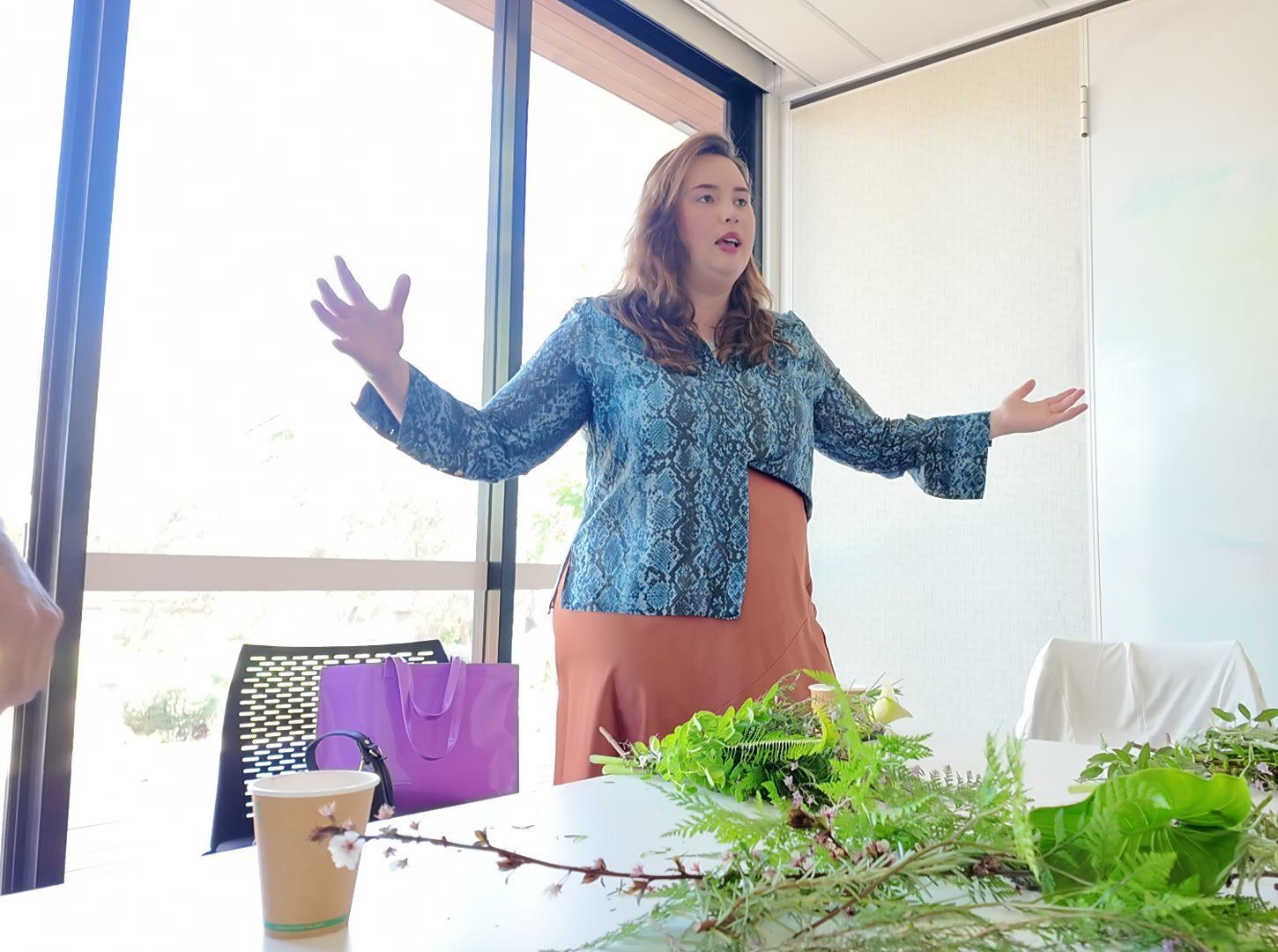
And once you begin experiencing environment as a participant rather than a background, ordinary spaces become difficult to see in quite the same way again.
What is different now is that I am more intentional about my environment, my breaks and how I show up each day. We often focus on strategy and productivity tools, but overlook the space we actually work in. Fixing that changed everything for me.
This workshop changed the way I see my workspace. I left with simple changes I could actually apply, and a completely different awareness of how the space around me can influence the way I work and feel.
Awareness is the first thing. Not the plant, not the renovation, not the product.
My father ran a small grocery shop in Brazil for more than forty years, often sixteen hours a day. As a child, standing behind his counter, I looked at everything competing for his attention and thought: this cannot be doing him any good. I did not have the language for it then.
Everything I have built since is so that other people do not have to spend twenty years finding it.
I teach the lens. The audience keeps it.

 The one sentence
I teach you to become the pilot of your environment.