You took the magnesium.
You did the breathwork. You walked in the morning sun. You cut the third coffee. You wore the smart ring. You read the book about the vagus nerve.
Your shoulders are still up by your ears at 7pm.
Your cortisol does not have a discipline problem. Your cortisol has an environment problem.
And you are sitting inside that environment right now.
What cortisol actually is
Cortisol is a steroid hormone produced by the adrenal glands in response to perceived demand on the body. It is essential. It rises sharply in the morning to wake you up, falls across the day, and reaches its lowest point in the late evening to allow sleep. This curve is called the diurnal cortisol rhythm, and a healthy version of it underpins almost everything we describe as energy.
What goes wrong, for most modern adults, is not cortisol itself. It is the curve. Mornings start flat. Evenings stay elevated. Sleep arrives late. Mornings start flat again.
Most wellness routines try to fix this with inputs to the body. Light therapy. Cold plunge. Adaptogens. Breathwork.
What almost no one talks about is that your body is reading the room you are sitting in, every twenty minutes, and adjusting cortisol output in response.
You cannot out-meditate a room that is keeping your nervous system on alert.
The environment-cortisol research is more established than people realise
In 2010, Darby Saxbe and Rena Repetti at the University of California, Los Angeles, published a study from the Center on Everyday Lives of Families. They tracked 32 dual-income families across a week. Saliva cortisol was sampled multiple times a day. Photographs and detailed walk-throughs of each home were collected.
The finding, published in the Personality and Social Psychology Bulletin, was that women who described their homes using words like cluttered or unfinished showed significantly elevated diurnal cortisol patterns, the cortisol shape associated with chronic stress, compared with women who described their homes as restful or restorative.
The home itself, not the work, not the children, not the marriage, was acting as a daily cortisol amplifier.
This was not a one-off finding. It sits inside a much wider literature on what is called environmental psychology. Roger Ulrich at Texas A&M demonstrated, as far back as 1984, that hospital patients with a window view of trees recovered faster from surgery and used less pain medication than patients with a view of a brick wall. Joseph Allen at Harvard, in the COGfx Study from 2015 and 2016, found that improving indoor air, daylight, and chemical load lifted cognitive performance by 61% and crisis-response performance by more than 100%. Peter Barrett at the University of Salford, in the HEAD Project, showed that the physical features of a classroom predicted 16% of how children learned across an entire year.
None of these are about discipline. All of them are about the room.
The four ways your home is quietly elevating your cortisol
1. The lighting
Your home lit by cool white 5000K LEDs from above is sending your body a signal it associates with midday sunlight. Cortisol stays elevated. Melatonin onset gets pushed later. The 2013 University of Colorado camping study by Kenneth Wright Jr., published in Current Biology, showed how powerful artificial light is at this: one week of natural-light-only camping shifted melatonin onset 2.5 hours earlier in adult participants. The reverse is happening to you every night you sit under bright overhead light at 9pm.
2. The visual load
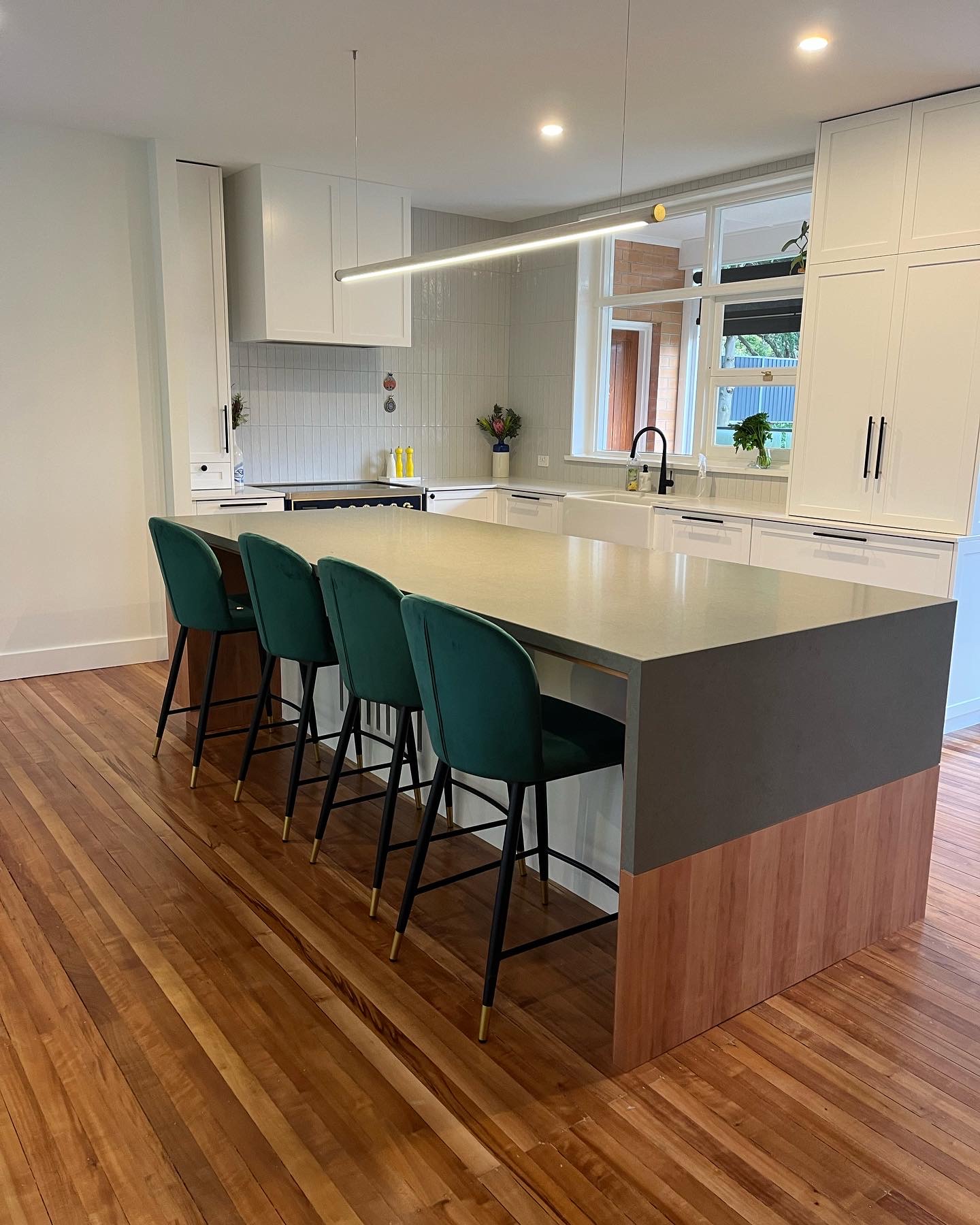
The items, surfaces, and unfinished tasks you can see from where you stand all place a small cognitive load on the brain. The CELF research above suggests this is one of the most direct lines to cortisol elevation in women in particular. The fix is not to throw everything out. The fix is to subtract visible load from the rooms you spend most of your time in. One clear bench. One quiet corner. One shelf that does not ask anything of you.
3. The air
Volatile organic compounds from synthetic fragrance, off-gassing furniture, and most cleaning sprays place a steady, low-grade demand on the body's detoxification systems. The World Health Organization classifies indoor air pollution as a major contributor to global disease. The United States EPA reports indoor pollutant levels two to five times higher than outdoors, and occasionally more than a hundred times higher. The cheapest cortisol intervention available is a window opened for two minutes, twice a day, year-round.
4. The sound
The 2009 World Health Organization Night Noise Guidelines for Europe document a clear association between chronic ambient sound above 40 dB(A) and elevated cortisol, particularly during sleep. Most kitchens with an extractor fan and an open dishwasher sit comfortably above this threshold during the evening. Most open-plan offices sit above it for the entire workday.
What lowers cortisol when you are at home
Six environmental shifts, in rough order of impact.
- Switch one overhead light to a 2700K warm white bulb. Add a hip-height lamp in the room you sit in after sunset. Turn off the overhead from 7pm onward.
- Open a window for two minutes, morning and evening. Cross-ventilation moves a full room of air faster than any purifier.
- Remove all plug-in fragrance, scented candles, and synthetic essential-oil diffusers from your home. A neutral-smelling home is a regulating home.
- Sit so you can see the entry of the room you are in. The body settles when the door is in view.
- Place one real plant in the room you spend most time in. The eye lands on green. The body recognises living matter.
- Build one daily five-minute reset. One sweep of the kitchen bench at the same time every evening, with the warm lamp on, the window cracked, and music or silence. Repeated daily, your nervous system begins to expect the wind-down.
What this is not
This is not a replacement for medical advice. Persistently elevated cortisol can have endocrine, metabolic, and psychological causes that need a clinician. If you are concerned, see a GP or endocrinologist.
This is also not a magic protocol. Environmental wellbeing works in the background, the way good lighting works in a film. You stop noticing it. You only notice the result.
Most women I work with are not unwell. They are environmentally exhausted. The fix is not another supplement. It is the room they live inside.
The shift that begins tonight
Switch the bulb. Open the window. Pull the couch off the wall.
Notice your shoulders by Friday.
That is what happens when your home stops asking too much of the body inside it.