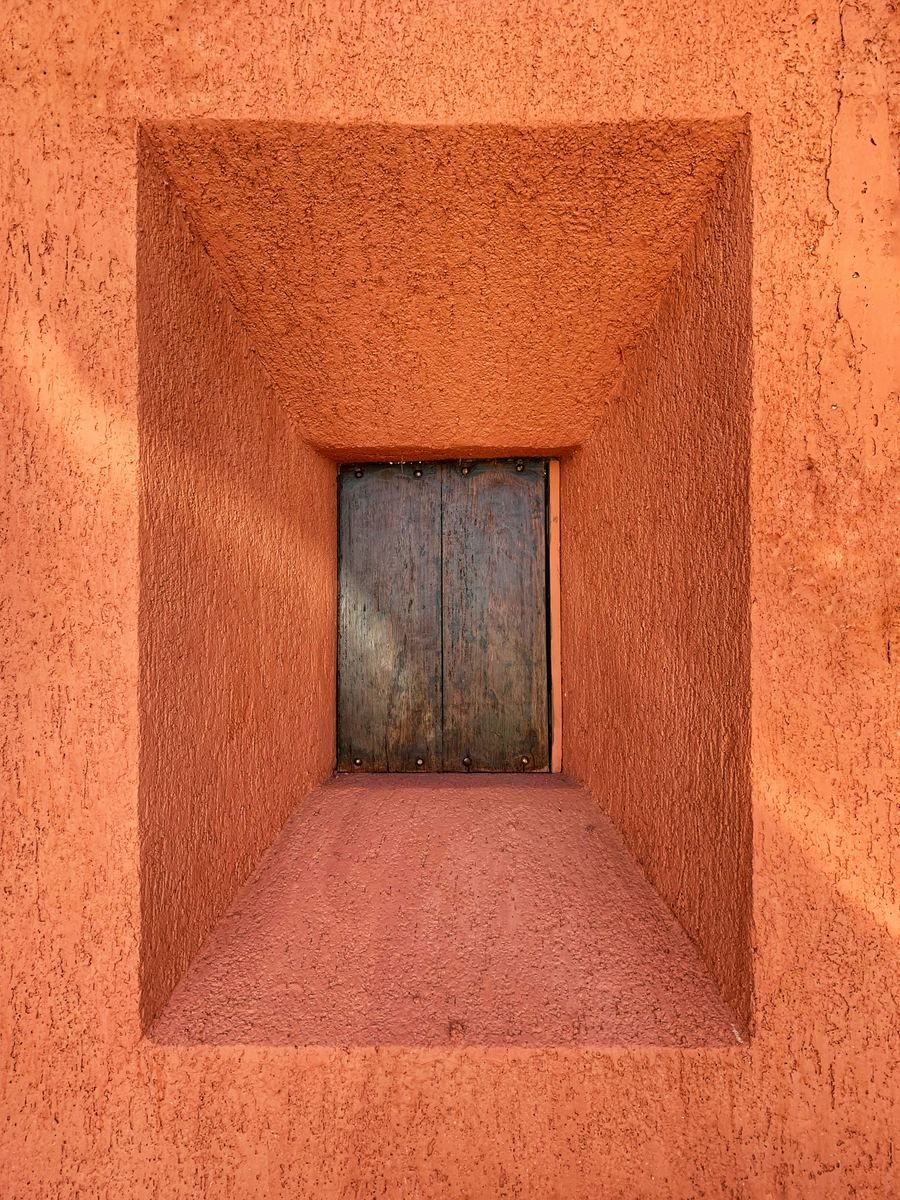
I was seven years old when I started redesigning my father’s supermarket. Not on paper. In my head.
I would look at the shelves, the products, the way people moved through the space, and I would imagine how it could all be arranged differently.
I knew nothing about architecture. I knew nothing about human behaviour. It took me years to understand that what fascinated me was never the space itself.
It was what the space made possible.
That is still my work. It started in my father’s supermarket.
The question nobody was asking.
At seventeen I began working in interior design in Brazil. I loved the sample library. I would touch the wood, study the textures and imagine how those materials would feel to the person living with them. Natural materials drew me in long before I had the vocabulary to explain why.
Life brought me to Australia, where I finished my studies in architecture and built a career delivering educational and commercial environments. I learned how to design. I learned how to build and deliver extremely complex projects.
And the more I learned about buildings, the more curious I became about the people inside them.
So I began asking a different question. Not only what can I do for this space.
What is this space doing to the person?
What the children taught me.
One of the most meaningful experiences of my professional life happened in South Australia, delivering educational buildings for children who live with disabilities and children who are neurodivergent.
I read and studied everything I could, so I could give those children the best possible environment inside the budget I had. I even set myself a challenge: to show that incredible architecture can fit inside a tight budget.
Sound. Light. Movement. Privacy. The chance for a child to withdraw from a situation when she needs to. No child stays engaged all day. No adult does either.
I delivered those buildings, and I saw with my own eyes how the children’s behaviour changed. Teachers came to me and asked:
“What have you done?”
They told me it was so much easier to teach in the new place.
What I witnessed made me question how often we ask a human being to change without ever examining the conditions in which that human being is expected to function.
We ask a child to concentrate, and we surround her with things competing for her attention. We can teach her new skills, and those skills may be incredibly valuable. I also want to understand the environment in which she is being asked to use them.
Then I began asking the same question about adults. About women who lead. About myself.
Becoming an adult does not mean we stop being influenced by our surroundings. We only become more used to managing the influence. Sometimes we manage it so well that we stop noticing it consciously. We still notice.
She has invested in everything she can learn.
There is a woman I think about often when I develop my work. She is curious. She loves learning. She loves building something meaningful that helps other people. She has invested in her education, her business, her leadership and her health, and she has seen what knowledge made possible in her life.
I wonder how often she has been invited to investigate her environment with that same curiosity.
I find it extraordinary that we can spend years learning about our minds, our habits and our performance without ever being taught to examine the conditions around us.
We study the person. We train the person. We invest in the person. And the person is always somewhere.
Every important decision you have made happened somewhere. Every idea you developed happened somewhere. Every conversation that changed the direction of your life happened somewhere.
I do not believe the environment explains everything about human performance. I believe it deserves a place in the conversation.
What the research can say, and what it cannot.
What I saw in those buildings is my experience. It is not a study. So here is what regulators and researchers have found, each with its size and its limits.
Safe Work Australia treats a poor physical environment as a psychosocial hazard when it is severe, prolonged or frequent. Its guidance lists conditions that affect concentration: high noise levels, uncomfortable temperatures or poor lighting.1
In simulated open-plan office noise, heart rate and skin conductance rose and mood dropped. Performance on the task did not change. The body registered it before the output did. A short laboratory task, and most of the participants were students.2
Workers without windows had lower light exposure, worse vitality and poorer sleep than workers with daylight. It compared two groups at one point in time. It changed nothing in their offices, and it did not measure thinking or output.3
After the same surgery, patients whose window looked onto trees had shorter stays and fewer negative notes from nurses than patients who looked onto a brick wall. Small, retrospective, more than forty years old, and not a study of workplaces. Its author wrote that the conclusions cannot be extended to all views or all patients.4
None of this evidence is large, recent and conclusive all at once. That is the honest state of the field. It is why I teach you to read your own environment, instead of asking you to trust a statistic about someone else’s.

My husband and I bought a house because of a tree.
There were practical considerations, of course. But there was something about that tree neither of us could ignore. I could imagine watching the light change through it during the day, watching the leaves move, living the seasons through something alive.
I was not buying a tree. I was choosing what I wanted present in my life every day. On an ordinary Tuesday morning, with my coffee. Something my daughter would grow up seeing.
I think about that tree when I explain my work. It does not ask for attention the way a notification does. It simply exists. It gives shade, it moves with the wind, it offers the eye somewhere to rest.
There is something beautiful about an environment that offers us an experience without constantly demanding something from us.
Why I teach, instead of only designing.
At a certain point in my career I realised something.
I could design an extraordinary environment for a woman. I could consider her routines, the light, the acoustics, the materials. And then she would travel for business. She would walk into a meeting in another building. She would move house. She would need to create an environment for her team.
Had I given her something she could take with her? Or something that existed at one address?
That distinction changed the direction of my work.
Think of a beautiful hotel you have stayed in. You walked in and wanted to stay. You could hear yourself think. Someone had made hundreds of decisions to create that experience. When you went home, did you know what you had responded to? Or did you only know that you loved being there?
There is an enormous difference between experiencing something wonderful and understanding how it was created. I call that understanding environmental intelligence. Once you have it, it is yours. It goes with you into your home, your business, your travels and every environment you create for other people.
My why is to make the invisible visible. The conditions have been there all along. I want you to be able to read them.
Tomorrow, at three in the afternoon.
At nine in the morning an office photographs beautifully. At three in the afternoon it tells a different story. People have been using it for hours. The light comes from another direction. The temperature has changed. Things have accumulated.
So tomorrow at three, stand up and walk through the place where you work. Not as the owner. Not as the person who is used to everything being where it is. As an observer.
Notice the light. The sound. The temperature. What your eyes are drawn toward. And ask one question.
What is this environment asking of me before I even start my work?
You do not need to change anything. I only want you to notice. Then name what you notice, and change one thing when you are ready.
Your environment is never neutral.