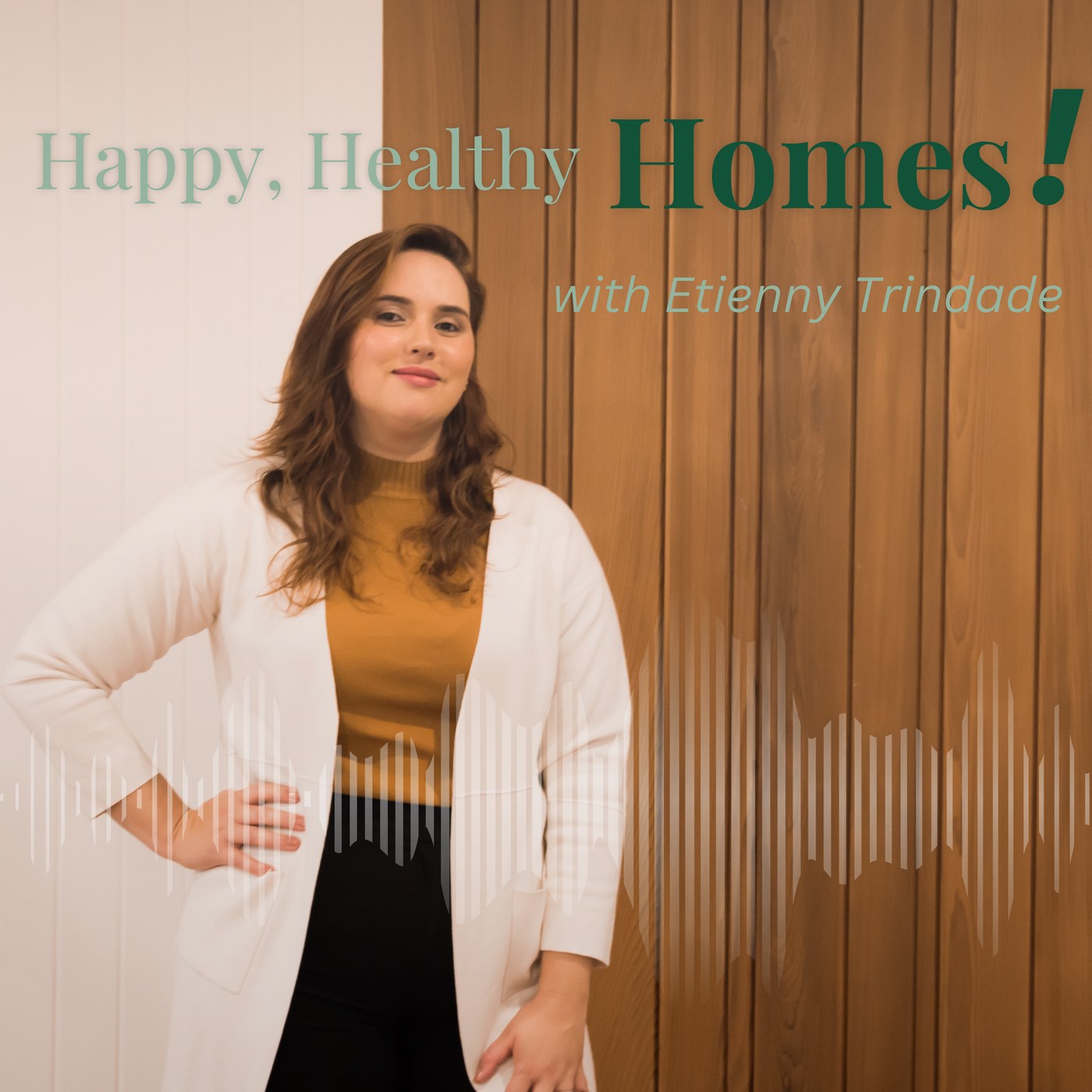
In this episode of Happy Healthy Homes, Etienny Trindade explains why modern spaces are designed for stimulation, not wellbeing, and why "normal" contemporary design quietly keeps your nervous system on high alert, leading to irritability, fatigue, and emotional tension.
In this episode you will learn
- Why modern homes are designed to keep you alert, not at rest
- The 3 forms of modern stimulation that drain your nervous system every day
- What historical design principles got right that contemporary design forgot
- Why your tiredness might be environmental, not biological
- How natural light, rhythm, and restoration shape emotional health
- Practical shifts you can make today to lower sensory load
The 3 forms of modern stimulation draining you
Sensory overload. Too many textures, colours, surfaces, sounds, and lights at once.
Visual noise. Clutter, decoration, and competing focal points that never let your eyes rest.
Constant mental demand. Open loops everywhere. Laundry, mail, screens, and decisions waiting to be made.
What historical design got right
Most older homes were quietly built around the nervous system without naming it. Modern homes are not.
When environmental design supports your nervous system, emotional health follows. One conscious shift at a time.
This episode answers
- Why am I tired all the time even when I sleep enough?
- What is sensory overload and how does my home cause it?
- Why does modern design feel exhausting?
- How did older homes support calm differently?
- How do I reduce visual noise in my space?
- Can changing my home actually fix my tiredness?
About the host
Etienny Trindade. Nervous System Designer with 20 years of experience. Author of Creating Healing Spaces for Children. Award winning designer of learning environments for neurodivergent children.
Remember. It is not about perfection. It is about one conscious choice at a time.