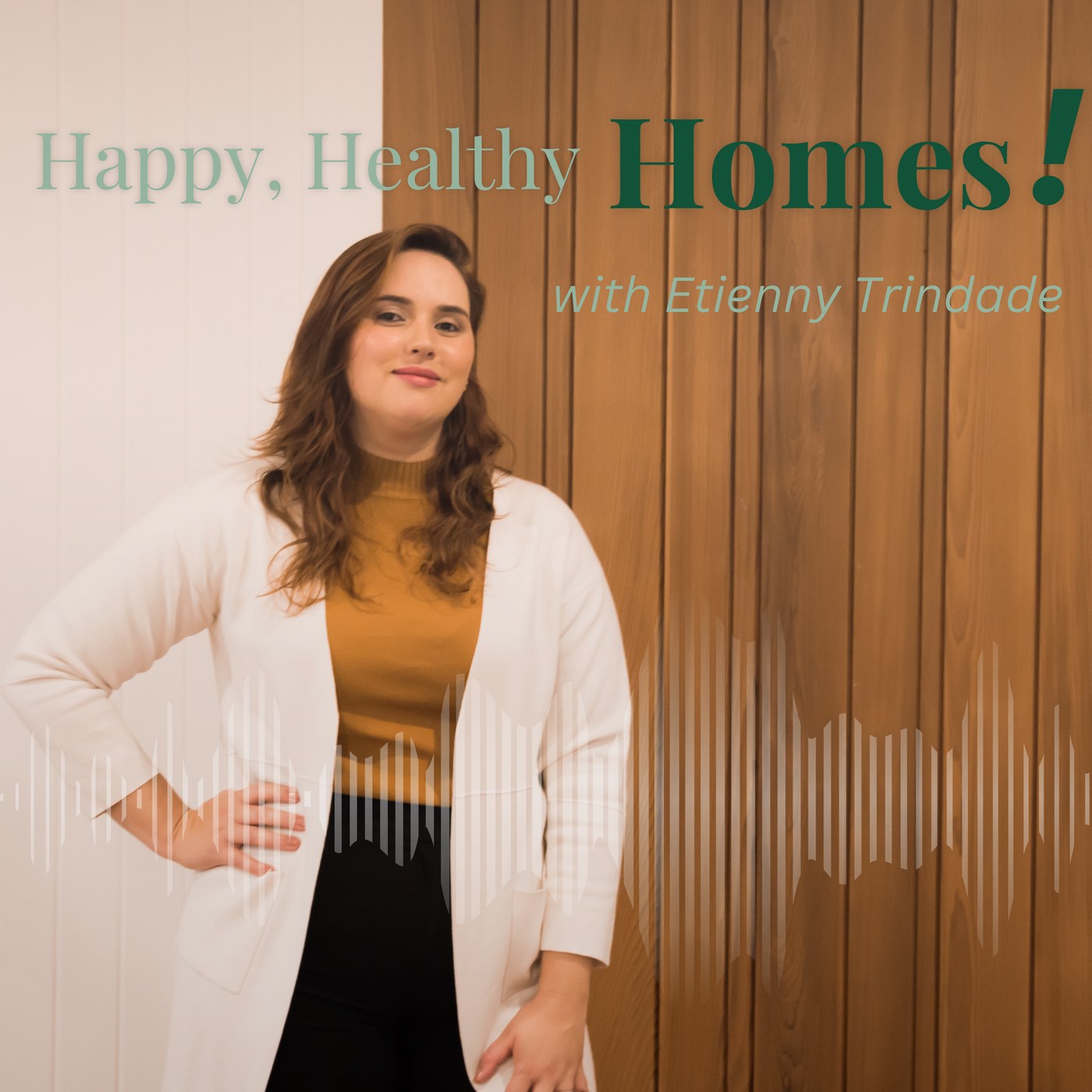
In this episode of Happy Healthy Homes, Etienny Trindade unpacks how the environment around a child is constantly shaping their behaviour, emotional regulation, and development. Drawing from 20 years in architecture and her award winning work designing learning spaces for neurodivergent children, she makes the case that most "child behaviour problems" are actually room problems in disguise.
This episode is for you if you have ever
- Watched your child meltdown and wondered what triggered it
- Suspected your home environment is making behaviour worse
- Parent a neurodivergent or sensory sensitive child
- Felt like the more toys you buy, the worse playtime gets
- Wanted to support your child's development beyond screens and discipline
The Silent Parent
Your home is teaching your child constantly. What is safe. What is overwhelming. What deserves attention. What can be ignored. Long before you say a word, the room has already given the lesson. Treat your environment as a silent parent and most "behaviour issues" become design conversations. Less visual noise. Softer textures. Predictable rhythm. Fewer toys, better played with. The room does half the parenting work, and it never raises its voice.
Clutter Raises Cortisol
Visible clutter is not just visually messy. It is biologically activating. Studies on home environments show that visible clutter increases cortisol (the stress hormone) in both adults and children. For neurodivergent kids, sensitive kids, and kids who are already navigating big feelings, a busy environment doubles the load they are carrying. The fix is not minimalism. The fix is intentional simplicity.
Chapters
00:00 Creating healing spaces for children
05:16 The impact of environment on child development
10:34 Understanding children's emotional responses
16:08 Practical tips for a calmer home
You are not just decorating. You are parenting through the environment.
This episode answers
- How does my home affect my child's behaviour?
- Why is my child more overwhelmed than other kids?
- Does clutter actually affect children's stress levels?
- How do I design a calming space for a neurodivergent child?
- Why does my child play better when there are fewer toys?
About the host
Etienny Trindade. Nervous System Designer with 20 years of experience. Author of Creating Healing Spaces for Children. Award winning designer of learning environments for neurodivergent children.
Remember. It is not about perfection. It is about one conscious choice at a time.